


What are the ways to optimize the flight attitude angle range of drones and expand their flight flexibility?
Ways to optimize the flight attitude angle range of drones and expand their flight flexibility
Drones have seen their application fields gradually expand in recent years, from logistics distribution to agricultural plant protection, from remote sensing monitoring to military reconnaissance, with their value of application becoming increasingly prominent. However, during the flight process, the limitations of the flight attitude angle range of drones, such as pitch angle, yaw angle, and roll angle, often restrict their flexibility and scope of application. Therefore, optimizing the flight attitude angle range of drones and expanding their flight flexibility has become an important direction in drone technology research.
1. Limitations of the flight attitude angle range
The limitations of the flight attitude angle range mainly come from the structural design and control algorithms of drones. The structural design of drones determines the range of their flight attitude angle, while the control algorithms determine the dynamic performance of drones within the flight attitude angle range. Generally, the pitch, yaw, and roll angle ranges of drones are between -180° and 180°, -90° and 90°, and -180° and 180°, respectively. However, these limitations may restrict the flexibility and application range of drones in practical applications.
2. Strategies for optimizing the flight attitude angle range of drones
Optimizing the structural design of drones
The structural design of drones is an important factor affecting the flight attitude angle range. At the initial stage of drone design, we should fully consider the limitations of the flight attitude angle range, and by optimizing the structural design, we can expand the flight attitude angle range as much as possible. For example, by adjusting the center of gravity of the body, we can expand the pitch angle range of the drone; by adjusting the layout of the rotors, we can expand the yaw and roll angle ranges of the drone.
Optimizing control algorithms
Control algorithms are an important factor affecting the flight attitude angle range of drones. In the design of control algorithms, we should fully consider the limitations of the flight attitude angle range of drones, and by optimizing the control algorithms, we can expand the flight attitude angle range of drones as much as possible. For example, by introducing adaptive control algorithms, we can achieve real-time adjustment of the flight attitude angle range of drones, thereby improving their flight flexibility.
Introducing multi-rotor drone technology
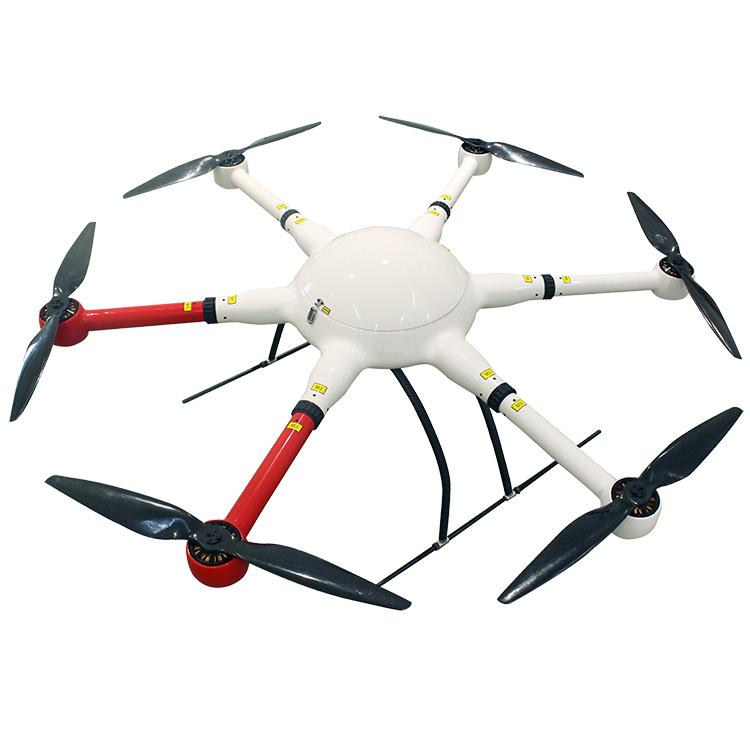
Multi-rotor drones can achieve more flexible control of the flight attitude angle range through the collaborative work of multiple rotors. For example, by adjusting the rotation speed of each rotor, we can achieve real-time adjustment of the pitch, yaw, and roll angles of the drone, thereby improving its flight flexibility. In addition, multi-rotor drones can also expand the flight attitude angle range of drones by adjusting the layout of each rotor.
Introducing artificial intelligence technology
Artificial intelligence technology can achieve intelligent control of the flight attitude angle range of drones. For example, by introducing machine learning algorithms, we can achieve real-time adjustment of the flight attitude angle range of drones, thereby improving their flight flexibility. In addition, artificial intelligence technology can also predict and optimize the flight attitude angle range of drones by analyzing flight data.
3. Conclusion
Optimizing the flight attitude angle range of drones and expanding their flight flexibility is an important direction in drone technology research. By optimizing the structural design of drones, control algorithms, introducing multi-rotor drone technology, and introducing artificial intelligence technology, we can achieve more flexible control of the flight attitude angle range of drones, thereby improving their flight flexibility. In the future, with the continuous development of drone technology, we believe that the flight flexibility of drones will be further improved, bringing more possibilities to the application fields of drones.
 What are the teaching contents to cultivate emergency response capabilities in drone training?
 What are the key technical points of weapon carriage and firing for drones in military strike missions?
 How to adjust shooting parameters during drone shooting to obtain high-quality images?
 What are the industry standard requirements for operation specifications in the field of drone application?