


How do the flight lift generation mechanism of multi-rotor drones and the collaborative work of propellers work?
The Flight Lift Generation Mechanism of Multi-rotor Drones and the Collaborative Work of Propellers
As a product of modern science and technology, multi-rotor drones have been widely used in fields such as aerial photography, agriculture, surveying and mapping, search and rescue, and logistics distribution. Their working principle is based on the flight lift generation mechanism of multi-rotor drones and how each propellerworks, thus achieving stable and precise flight. This article will delve into this field to gain a deeper understanding of the working principle of multi-rotor drones.
One, The Flight Lift Generation Mechanism of Multi-rotor Drones
The flight lift generation mechanism of multi-rotor drones is mainly based on Bernoulli's principle and Newton's third law. Bernoulli's principle states that when a fluid flows, the faster the flow, the lower the pressure. During the flight process of multi-rotor drones, as the propeller blades rotate at high speed, the air is accelerated, thereby creating a low-pressure area on the upper surface of the propeller blades, while the lower surface of the blades, due to slower air flow, has a relatively higher pressure, thus forming an upward lift. According to Newton's third law, when the propeller blades blow air downward, the air exerts an upward reactive force on the propeller blades, thus generating lift.
Two, The Importance of Propeller Collaborative Work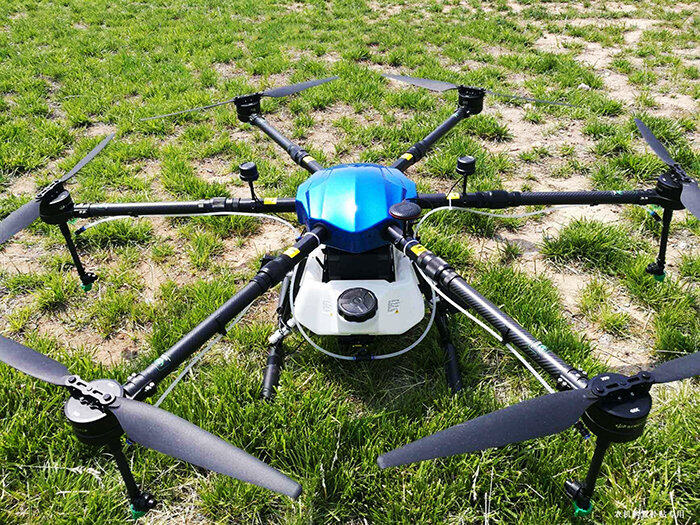
The collaborative work between the propellers of multi-rotor drones is crucial for flight stability, maneuverability, and efficiency. During the flight process of multi-rotor drones, the speed and angle of each propeller need to be precisely controlled. If the speed or angle of a propeller changes, it will cause the lift generated by that propeller to change, which in turn affects the flight attitude of the drone. Therefore, multi-rotor drones need to adjust the speed and angle of each propeller in real-time through control algorithms to maintain the flight stability and control accuracy of the drone.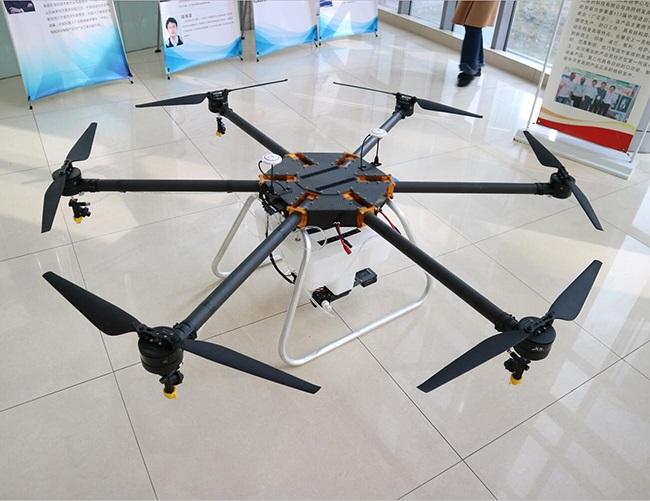
Three, The Control Methods of Multi-rotor Drones
The control methods of multi-rotor drones mainly include attitude control, position control, and heading control. Attitude control refers to maintaining the flight attitude of the drone by adjusting the speed and angle of each propeller. Position control refers to maintaining the drone's hovering at a predetermined position by adjusting the speed and angle of each propeller. Heading control refers to achieving the drone's forward, backward, left turn, and right turn operations by adjusting the drone's heading. To achieve these controls, multi-rotor drones are usually equipped with multiple sensors such as accelerometers, gyroscopes, magnetometers, and GPS to provide attitude, position, and heading information for the drone. The information of these sensors will be transmitted to the drone's flight control module, and then adjusted in real-time through control algorithms to adjust the speed and angle of each propeller, in order to achieve stable flight and precise operation of the drone.
Four, Conclusion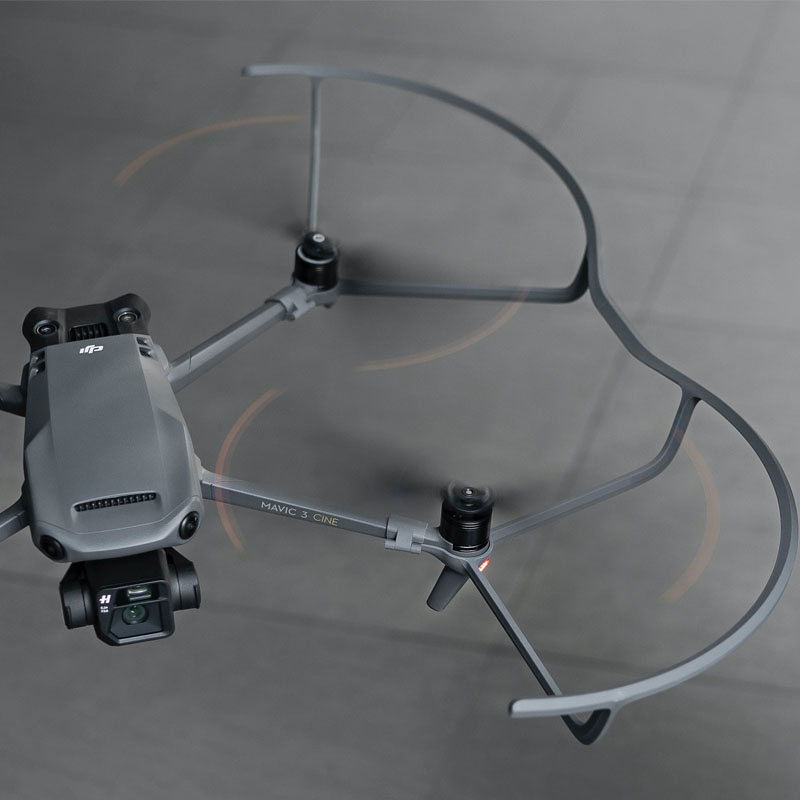
The flight lift generation mechanism of multi-rotor drones and how each propellerworks is the key to their stable and precise flight. With the development of technology, the control technology and application fields of multi-rotor drones are also constantly expanding, and multi-rotor drones will play an important role in more fields in the future.
 What are the teaching contents to cultivate emergency response capabilities in drone training?
 What are the key technical points of weapon carriage and firing for drones in military strike missions?
 How to adjust shooting parameters during drone shooting to obtain high-quality images?
 What are the industry standard requirements for operation specifications in the field of drone application?