


What are the measures to improve efficiency and accuracy in the logistics distribution of UAV swarms?
Unmanned aerial vehicle (UAV) swarms collaborate in logistics distribution, as a new and promising logistics model, it is gradually attracting more and more attention from enterprises and research institutions. It not only can significantly improve the efficiency of logistics, but also can enhance the accuracy and safety of distribution to a certain extent. The following are several key measures to improve efficiency and accuracy when UAV swarms collaborate in logistics distribution:
1. High-Precision Positioning and Navigation System
The key to drone cluster collaborative distribution lies in precise positioning and navigation to ensure that drones can accurately reach designated locations and land safely. This requires reliance on high-precision GPS positioning systems, inertial measurement units (IMUs), and visual positioning systems, among other technologies. Through the comprehensive application of these technologies, drones can perceive their own position and the surrounding environment in real-time, thus achieving high-precision autonomous navigation and path planning.
2. Drone Cluster Collaboration Technology
Drone cluster collaboration technology is the core of efficient drone distribution. Through communication and information sharing between drones, tasks can be allocated, collaborative work can be carried out, and task adjustments can be made within the cluster. For example, when a drone fails or encounters a task conflict and cannot continue to execute the task, other drones can quickly take over its task to ensure the smooth completion of the entire distribution task. In addition, drone clusters can also achieve efficient sorting and loading of goods through collaborative flight among multiple drones, further improving the efficiency of distribution.
3. Optimized Flight Path Planning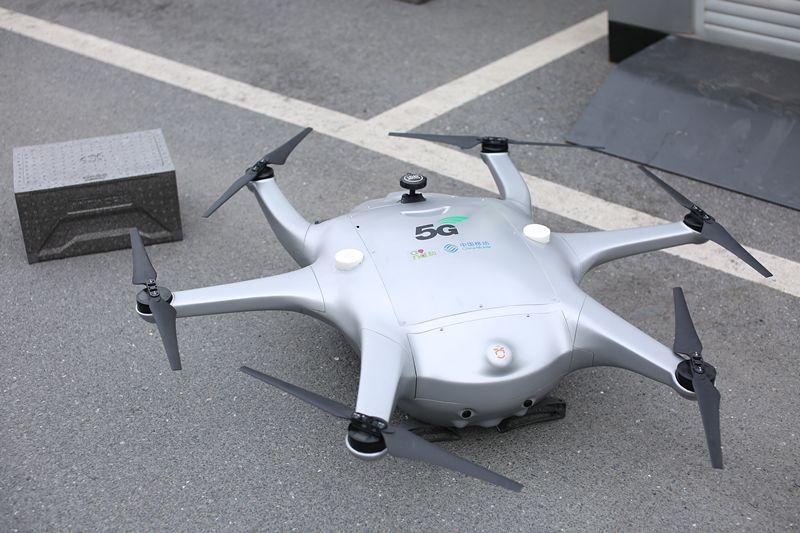
The selection of flight paths is crucial when drones are executing distribution tasks. By optimizing the flight path planning algorithm, the risk of collisions between drones can be effectively reduced, improving the efficiency of distribution. The path planning algorithm needs to consider multiple factors such as terrain, weather conditions, the flight capabilities of drones, and battery endurance to ensure that drones can complete the distribution task in the shortest time possible while ensuring the safety and stability of the flight.
4. Real-time Monitoring and Management of Drone Cluster Collaborative Distribution
To ensure the safety and efficiency of the collaborative distribution of drone clusters, a comprehensive real-time monitoring and management system needs to be established. This system can monitor the flight status, location information, and task execution of drones in real-time, and promptly identify and deal with potential problems. At the same time, through big data analysis and machine learning algorithms, the distribution tasks of the drone cluster can be optimized to improve the efficiency and accuracy of distribution.
5. Safety Assurance Measures
In the collaborative distribution of drone clusters, safety assurance measures are equally important. This includes strict control over the flight speed, altitude, and distance of drones, as well as reasonable planning for the battery capacity and endurance time of drones. In addition, a comprehensive emergency response plan needs to be established to deal with possible emergencies, ensuring the safe operation of the drone cluster collaborative distribution.
Drones working in a cluster can significantly improve the efficiency and accuracy of logistics distribution through the application of high-precision positioning and navigation, drone cluster collaboration technology, optimized flight path planning, real-time monitoring and management, and safety assurance measures, bringing revolutionary changes to the logistics industry.
 What are the teaching contents to cultivate emergency response capabilities in drone training?
 What are the key technical points of weapon carriage and firing for drones in military strike missions?
 How to adjust shooting parameters during drone shooting to obtain high-quality images?
 What are the industry standard requirements for operation specifications in the field of drone application?