


How does the communication mechanism of drone swarm collaborative flight ensure the way of information interaction among various drones?
The collaborative flight of drone swarms is an important direction of current drone technology development, showing great application potential in fields such as agriculture, surveying and mapping, rescue, and monitoring. However, to achieve the collaborative flight of drone swarms, an effective communication mechanism is indispensable. This article will discuss the methods of information interaction in the collaborative flight of drone swarms, including the design principles, common technologies, and future development trends.
Design Principles of Communication Mechanism
Reliability: In drone swarms, any single point of failure can lead to the failure of the entire system. Therefore, the communication mechanism needs to have high reliability, ensuring the reliable transmission of information under various conditions and environments.
Security: Collaborative flight of drone swarms involves a large amount of information exchange, so the communication mechanism must have high security to prevent information from being tampered with or stolen.
Real-time: To ensure the efficiency of drone swarm collaborative flight, the communication mechanism needs to provide real-time data transmission capabilities, ensuring that drones can exchange information quickly and accurately.
Robustness: In complex and variable flight environments, the communication mechanism needs to have strong robustness, which can maintain normal information transmission in the event of interference or obstructions.
Common Communication Technologies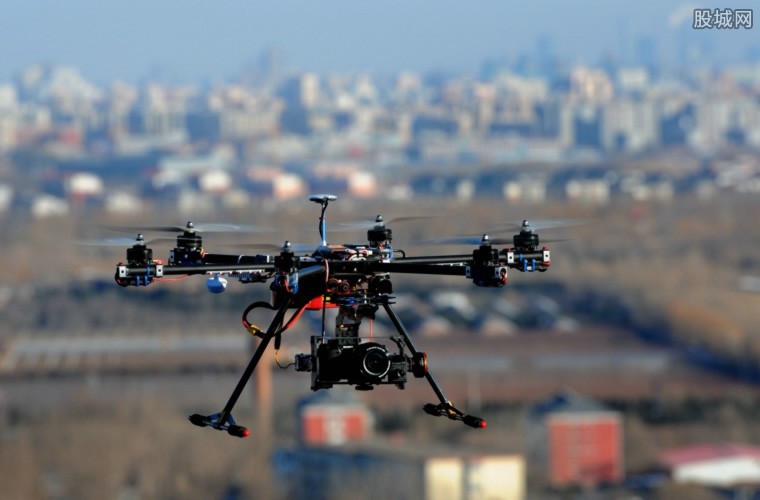
Radio Communication: As a commonly used communication means in drone swarms, radio communication technology has the advantages of low cost and long transmission distance. However, there are still certain limitations in terms of reliability and security.
Laser Communication: Laser communication technology can provide high-speed, low-latency data transmission, suitable for short-distance communication of drone swarms. However, due to its dependence on good line-of-sight conditions, its application in complex environments is limited.
Satellite Communication: For drone swarms that need to cover a wide area, satellite communication technology can provide stable long-distance communication capabilities. However, it is costly and has the problem of signal delay.
Hybrid Communication: By combining the advantages of various communication technologies, a hybrid communication scheme can achieve efficient communication for drone swarms in different environments. For example, ground base stations combined with satellite communication can improve the reliability and coverage range of communication.
Future Development Trends
With the development of new communication technologies such as 5G and 6G, the communication mechanism of drone swarms will become more intelligent and efficient. For example, through artificial intelligence technology, adaptive communication can be achieved, dynamically adjusting communication parameters according to the actual communication environment to achieve the optimal communication effect. In addition, with the development of quantum communication technology, the communication security performance of the future drone swarms is expected to be significantly improved.
In summary, the communication mechanism of a drone swarm collaborative flight is one of the key factors for its success. Through reasonable design of the communication mechanism and continuous exploration of the application of new technologies, the future drone swarms will be able to fly more efficiently and safely in collaboration, bringing more convenience and value to human society.
 What are the teaching contents to cultivate emergency response capabilities in drone training?
 What are the key technical points of weapon carriage and firing for drones in military strike missions?
 How to adjust shooting parameters during drone shooting to obtain high-quality images?
 What are the industry standard requirements for operation specifications in the field of drone application?