


Coping strategies for drones flying in smoggy weather with restricted visual navigation?
Coping strategies for drones flying in smoggy weather with restricted visual navigation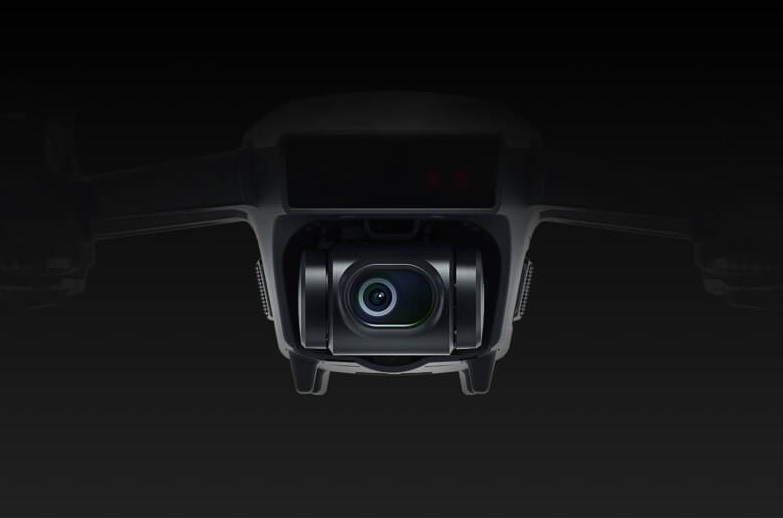
Smoggy weather refers to the phenomenon where visibility is reduced due to an excessive amount of suspended particles in the atmosphere. Under smoggy weather conditions, the visual navigation system of drones may be severely restricted, or even completely fail. In this case, the flight safety and task execution of drones will face major challenges. This article will discuss the coping strategies for drones flying in smoggy weather when visual navigation is restricted.
The reasons for the restriction of visual navigation of drones in smoggy weather
In smoggy weather, suspended particles and water vapor in the air will absorb and scatter sunlight in large quantities, greatly reducing the intensity of light and causing visibility to decline. In addition, suspended particles and water vapor in smoggy weather will adhere to the camera lens of drones, affecting the transparency of the lens and causing the camera to fail to obtain environmental images clearly. At the same time, suspended particles and water vapor in smoggy weather may interfere with the sensors of drones, affecting the normal operation of the sensors and thus affecting the navigation and positioning of drones.
Secondly, the strategies for dealing with the restriction of visual navigation of drones in smoggy weather flight
1. Use other sensors for navigation and positioning
In smoggy weather, the visual navigation system of drones may not work normally, but other sensors of drones, such as inertial measurement units (IMU), GPS, and LiDAR, can still work normally. Therefore, drones can use these sensors for navigation and positioning to ensure flight safety. For example, drones can use GPS and IMU for positioning and attitude control, and use LiDAR for environmental mapping to plan flight paths.
2. Adopt radar navigation
Radar navigation is a navigation technology based on electromagnetic waves that can provide high-precision positioning and navigation information in smoggy weather. Drones can use radar sensors, such as synthetic aperture radar (SAR) and microwave radar, to obtain high-resolution images and three-dimensional models of the environment, thus realizing real-time monitoring and navigation of the environment. Radar navigation technology can provide all-weather and all-time navigation capability, unaffected by smoggy weather.
3. Adopt visual enhancement technology
Visual enhancement technology is a method to improve the visual navigation capability of drones in smoggy weather by enhancing the image quality of cameras. Drones can use high-resolution cameras and advanced image processing algorithms, such as image enhancement, image segmentation, and target recognition, to improve the image quality of cameras. In addition, drones can also use multi-camera collaboration, through image fusion and deep learning technologies, to improve the image quality of cameras, thus enhancing the visual navigation capability of drones in smoggy weather.
4. Combine autonomous flight with remote control
In smoggy weather, the visual navigation system of drones may not work normally, but the autonomous flight and remote control technology of drones can still provide certain flight safety. Drones can combine autonomous flight with remote control to improve flight safety in smoggy weather. For example, drones can use autonomous flight technology to monitor the environment in real-time and navigate; at the same time, drones can also use remote control technology to monitor and control the drones in real-time. In this way, drones can improve flight safety in smoggy weather by combining autonomous flight with remote control.
In smoggy weather, the flight of drones is restricted in terms of visual navigation, and the corresponding strategies mainly include using other sensors for navigation and positioning, adopting radar navigation, using visual enhancement technology, and combining autonomous flight with remote control. These strategies can effectively improve the flight safety and mission execution capability of drones in smoggy weather, thus ensuring the safe flight and completion of missions for drones.
 What factors limit the communication distance of UAVs, and how can it be effectively extended?
 How to improve efficiency through innovative applications of drones in logistics and warehousing?
 What is the key role of the development of drone battery technology in enhancing endurance capability?
 The development of gesture control interaction functions for drones, the principle of recognizing gestures and executing them?